

Preventing Garage Door Freezing in Denver’s Cold Months
Strong Door Garage explains why Denver garage doors freeze shut during winter and provides prevention steps to avoid this common problem. The freeze-thaw cycle causes water to pool under door seals and refreeze overnight.
- Garage doors freeze at three main points - the bottom seal to floor, section joints between panels, and tracks with rollers. Older uninsulated garages in the metro area experience this most often.
- Prevention includes clearing debris from the floor line, replacing cracked bottom seals with cold-rated rubber, and applying silicone-based lubricant to moving parts before temperatures drop.
- Daily winter care involves shoveling the apron, drying the seal line after parking wet cars, and using warm water with a plastic scraper if the door freezes - never force it or use boiling water.
To prevent garage door freezing, apply a silicone-based lubricant to the bottom rubber seal before temperatures drop. Keep the garage floor clear of snow and slush that can refreeze overnight. Ensure proper drainage away from the door threshold and consider installing a threshold seal to create a barrier between the door and concrete surface.
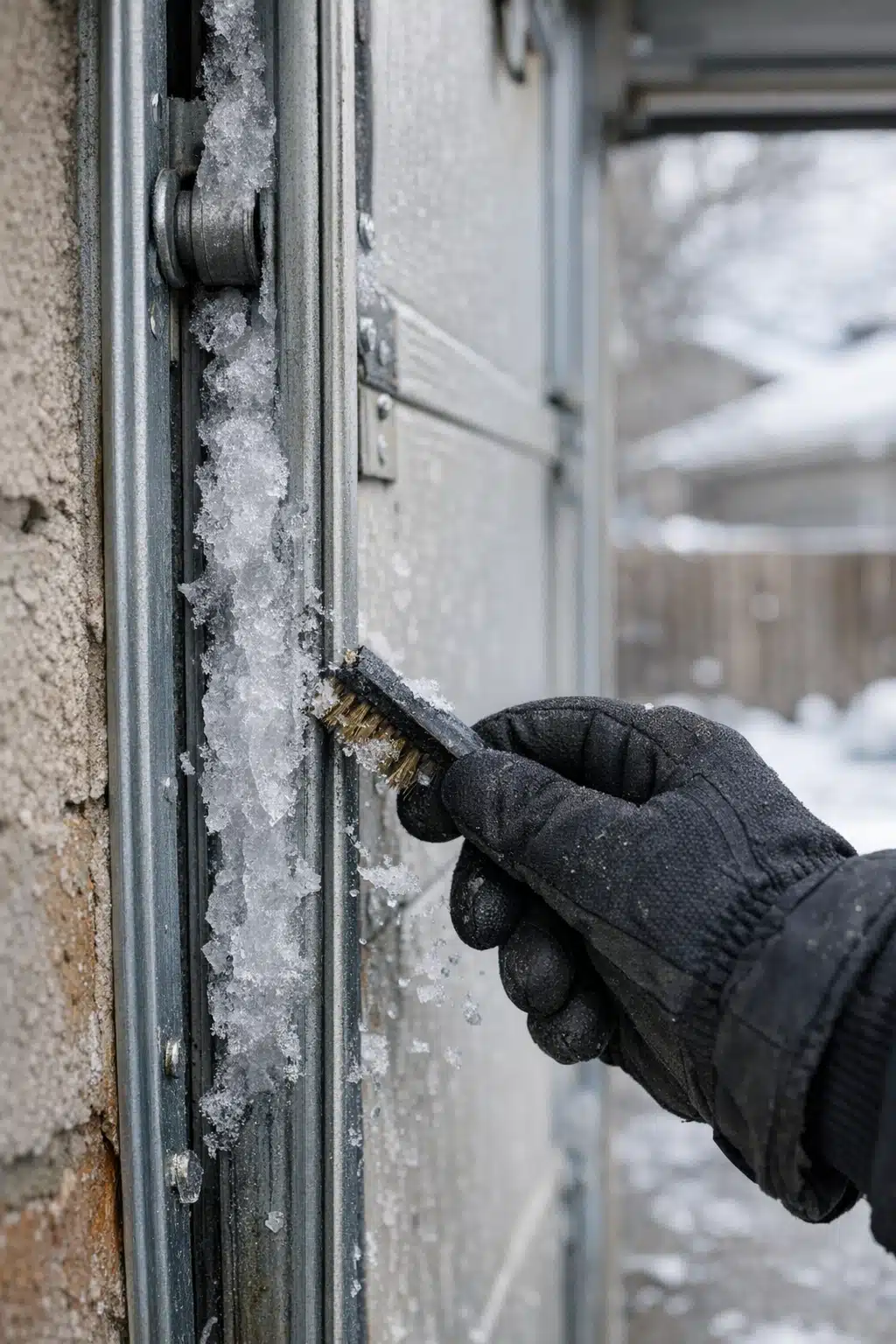
You wake up at 6:30 a.m. in Highlands Ranch, hit the remote, and your garage door groans an inch before stopping cold. The rubber seal froze to the concrete overnight after yesterday’s slush refroze at 12 degrees. This is one of the most common winter calls Strong Door Garage gets across Denver, and garage door freezing prevention is the reason most of those calls never had to happen.
Denver’s freeze-thaw cycle is the real culprit. Daytime sun melts snow, water pools under the bottom seal, and a sudden overnight drop locks everything in ice. Below, you learn why it happens, how to spot the warning signs, and the exact steps to keep your door moving all winter.
Why Denver Garage Doors Freeze Shut
A garage door freezes shut when moisture between the bottom seal and the concrete floor turns to ice. That ice bonds the rubber to the slab like glue.
Denver makes this worse than most places. Our high-altitude sun melts snow fast during the day, then temperatures plunge after sunset.
The water never gets a chance to drain or evaporate. It sits at the base of your door and freezes solid.
The Three Freeze Points
Garage doors in the metro area freeze at predictable spots:
- Bottom seal to floor: The most frequent failure, caused by refrozen meltwater.
- Section joints: Moisture between panels freezes and stiffens the hinges.
- Tracks and rollers: Ice buildup in the vertical tracks stops the door from lifting evenly.
Older homes in Lakewood and Aurora with uninsulated garages see this most. A cold slab holds frost longer than a heated or insulated space.
How to Tell Your Door Is Freezing, Not Failing
Homeowners often assume a stuck door means a broken motor or spring. In winter, ice is the more likely cause.
Here is how to tell the difference:
- The opener hums but the door won’t move: The motor is working against ice, not a mechanical fault.
- The door lifts a few inches then stops: The bottom seal broke free but ice remains at the corners.
- A loud crack when it finally opens: That sound is the rubber seal tearing away from the frozen concrete.
- The problem only happens on cold mornings: A true spring or opener fault acts up in any weather.
Forcing a frozen door is the fastest way to turn a free fix into a repair bill. Repeated strain can snap the seal, strip the opener gears, or bend a panel.
Garage Door Freezing Prevention: Steps to Take Before Winter
The best time for garage door freezing prevention is before the first hard freeze hits the Front Range. Most of this takes an afternoon.
1. Clear and Seal the Floor Line
- Sweep out dirt, leaves, and debris along the bottom of the door.
- Check that the concrete slopes away from the door, not toward it.
- Fill cracks in the slab where water pools and refreezes.
If water collects at your door after every snow, the grade or drainage is the root problem. A small concrete patch can stop years of freezing.
2. Inspect and Replace the Bottom Seal
The rubber astragal seal is your first defense. Cracked or flattened seals let water seep under and freeze.
- Press the seal with your hand. If it stays dented, it has lost its flexibility.
- Look for splits, chunks missing, or daylight showing underneath.
- Replace brittle seals before temperatures drop below freezing.
In Denver’s cold, standard PVC seals harden and crack. A cold-rated rubber or vinyl seal stays pliable down to sub-zero temps.
3. Lubricate Moving Parts With the Right Product
Here is where many homeowners make it worse. WD-40 attracts grime and gums up in the cold.
- Clean the rollers, hinges, and springs with a dry cloth.
- Apply a silicone-based or lithium garage door lubricant.
- Wipe excess so it does not collect dust and freeze.
Silicone lube holds up in low temperatures and keeps metal parts from stiffening. Do this in late fall and again mid-winter.
4. Add Weatherstripping Around the Frame
Side and top weatherstripping blocks wind-driven snow from blowing into the tracks. A sealed frame keeps the garage interior warmer, which slows frost at the slab.
5. Insulate the Garage If You Can
Insulated doors and garages hold enough heat to keep the floor above freezing. For Centennial and Highlands Ranch homes with attached garages, this cuts freezing complaints sharply.
Cold Weather Garage Door Tips for Daily Winter Use
Prevention does not stop once snow falls. These cold weather garage door tips keep your door moving on the worst mornings.
- Shovel the apron: Clear snow and slush away from the door before it refreezes overnight.
- Dry the seal line: After parking a wet car inside, towel off standing water near the door.
- Break ice gently: Use a plastic scraper or warm water at the corners, never a metal pry bar.
- Adjust opener force carefully: If the opener strains, stop and clear ice instead of raising the force setting.
- Keep a bag of ice melt handy: A light scatter along the floor line prevents meltwater from bonding.
Avoid pouring boiling water on a frozen door. It refreezes fast and can crack the panel or the concrete.
What to Do When the Door Is Already Frozen Shut
If you are stuck on a frigid Denver morning, work slowly:
- Stop pressing the opener button after two failed tries.
- Pour warm, not boiling, water along the bottom seal.
- Use a plastic putty knife to free the seal from the ice.
- Try lifting the door by hand after disengaging the opener.
- Once open, clear all ice before closing it again.
Repeatedly hammering the opener is how homeowners burn out a motor in January.

 Posted on Google
When to Call a Denver Garage Door Pro
Some freezing problems point to damage that a seal swap won’t fix. Call for an inspection when you notice:
- The door opens unevenly or sticks on one side after thawing.
- A snapped or stretched spring, visible as a gap in the coil above the door.
- Bent tracks or cracked panels from past forced openings.
- An opener that struggles even after the ice is gone.
- Repeated freezing despite new seals and drainage fixes.
A technician can check spring tension, track alignment, and seal fit in one visit. Catching a weak spring before it snaps saves a far costlier emergency call during a cold snap.
Denver Cost Considerations
A new bottom seal installed runs far less than a bent-panel replacement. Most Denver homeowners pay a modest fee for a seasonal tune-up that covers lubrication, seal checks, and track alignment.
That visit is cheaper than one emergency callout at 10 p.m. in a blizzard. Preventive maintenance is the clearest way to avoid winter surprises.
Key Takeaways
Garage door freezing prevention comes down to blocking water, keeping seals flexible, and using silicone lubricant before the cold sets in. Clear the floor line, dry the seal after wet parking, and never force a frozen door. When freezing keeps coming back or springs look worn, a quick inspection stops a small problem from becoming a winter emergency.
Want your door checked before the next Denver freeze? Strong Door Garage serves Denver, Aurora, Lakewood, Centennial, and Highlands Ranch. Call or text 720‑696‑3989, email contact@strongdoorgarage.com, or visit https://strongdoorgarage.com to book an inspection or quote.
Sources
- National Weather Service – Denver/Boulder Forecast Office
- U.S. Department of Energy – Air Sealing Your Home
- U.S. Consumer Product Safety Commission – Garage Door Safety


