

How to Quickly Fix Your Garage Door After a Denver Snowstorm
Strong Door Garage explains how Denver's freeze-thaw cycles cause garage doors to stick and strain openers, offering step-by-step fixes homeowners can try and guidance on when to call a professional.
- The most common post-storm issue is a frozen bottom seal - fix it by gently chipping ice with a plastic scraper, applying lukewarm water, and drying the threshold to prevent refreezing.
- Never attempt torsion spring replacement, cable repairs, or bent track straightening yourself - these carry serious injury risk and require a trained technician.
- Prevent future freeze-downs by replacing brittle seals before winter, applying silicone lubricant monthly, and clearing snow from the door base after each storm.
Start by clearing snow and ice from around the base of the door. Use a heat gun or hair dryer on low to gently warm the bottom seal where it meets the concrete. Avoid forcing the door open, as this can damage the seal or opener. Apply a silicone-based lubricant to prevent future freezing once the seal is free.
Why Denver Snowstorms Hit Garage Doors So Hard
A frozen garage door is one of the most common calls Strong Door Garage receives after a heavy Front Range snowfall. The bottom seal freezes to the concrete overnight, and the door refuses to budge in the morning.
Denver’s climate makes garage door snowstorm repair a seasonal reality. Our temperature swings melt snow during the day, then refreeze it at night, locking doors to the ground and straining openers.
Below you’ll find the exact steps our technicians recommend, what you can fix yourself, and when the problem needs a trained set of hands.
Common Garage Door Problems After a Snowstorm
Snow and sub-zero cold affect specific parts of your door. Knowing the symptom helps you act fast.
The Door Is Frozen to the Ground
This is the number one post-storm issue in neighborhoods like Highlands Ranch and Centennial. Melted snow pools under the rubber seal, then freezes solid against the slab.
How to identify it: The opener hums or strains but the door lifts only an inch before stopping.
The Opener Reverses or Won’t Lift
Cold thickens the grease inside tracks and rollers. The added resistance trips the opener’s safety sensor, and it reverses to protect the motor.
A Snapped Torsion Spring
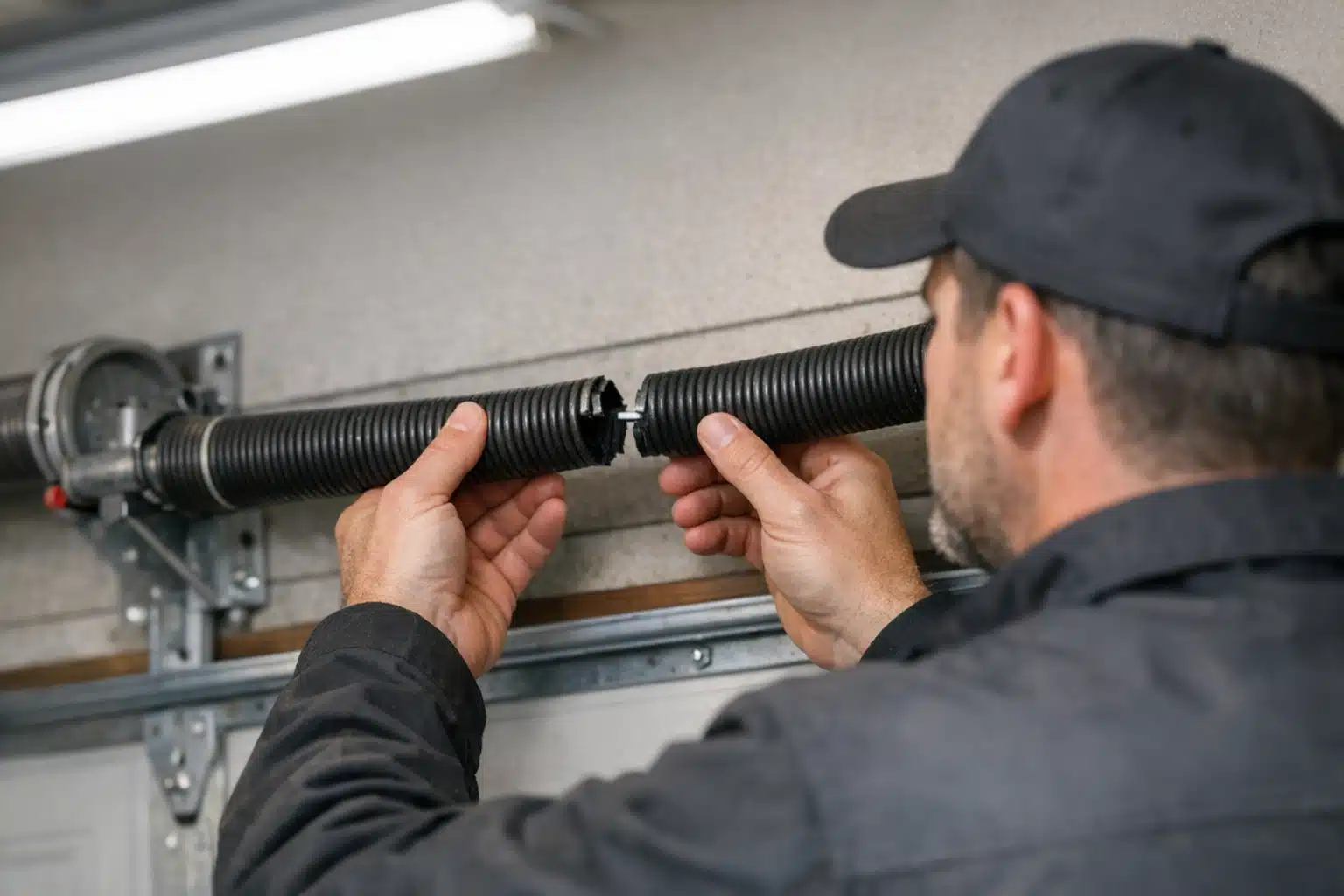
A broken garage door spring is one of the most frequent cold-weather failures in Denver homes. Steel contracts in deep cold, and an aging spring can snap with a loud bang near 15°F.
How to identify it: A visible gap in the spring above the door, or a door that feels like dead weight.
Frozen or Misaligned Photo-Eye Sensors
Snow splash and ice can block the small sensors near the floor on each side of the door. A blocked sensor stops the door from closing fully.
How to Fix a Frozen Garage Door: Step by Step
Follow this order before calling for help. Most frozen-to-the-ground cases clear in under 20 minutes.
- Stop pressing the button. Repeated attempts burn out the opener motor or strip the drive gear.
- Break the ice seal. Chip gently along the bottom edge with a plastic ice scraper. Avoid metal tools that tear the rubber seal.
- Apply warm water, not boiling. Pour lukewarm water along the frozen seam. Boiling water cracks cold concrete and can refreeze fast.
- Clear snow from the base. Shovel out any packed snow against the door before opening.
- Disengage the opener. Pull the red emergency cord and lift by hand to test if the door moves freely.
- Dry the seal and threshold. Wipe standing water so it cannot refreeze overnight.
If the door lifts by hand but the opener still struggles, the motor or sensors need attention, not the door itself.
What to Do About Frozen Sensors
Wipe each photo-eye lens with a dry cloth. Clear any snow piled in front of them, and check that the small indicator lights glow steady, not blinking.
Lubrication After the Thaw
Once the door moves freely, apply a silicone-based lubricant to rollers, hinges, and the spring. Avoid WD-40, which strips grease and attracts grit in cold weather.
What You Should Never Do Yourself
Some post-storm repairs carry real injury risk. Leave the following to a trained technician.
- Torsion spring replacement. Springs hold hundreds of pounds of tension and can cause serious hand and face injuries.
- Cable repairs. A frayed or off-track cable under load snaps unpredictably.
- Bent track straightening. Forcing a track out of alignment warps the whole panel system.
- Opener gear or circuit board swaps. Cold-cracked boards need proper diagnosis, not guesswork.

 Posted on Google
When to Call for Garage Door Snowstorm Repair
Call a technician if any of the symptoms below appear after you clear the ice.
- The door still won’t lift by hand after the seal is free.
- You hear a loud bang and see a gap in the spring coil.
- Cables hang loose or the door sits crooked in the opening.
- The opener runs but the door stays shut.
- Panels are cracked or dented from ice buildup.
Strong Door Garage runs emergency repair across Denver, Aurora, Lakewood, and Centennial during winter storms. A stuck door in a single-car attached garage can trap your only vehicle, so same-day help matters.
What Snowstorm Repairs Cost in Denver
A broken torsion spring replacement in the metro area runs roughly $200 to $350, depending on spring size and door weight. Cable and roller work falls lower, often $120 to $220.
Replacing a frozen, torn bottom seal is an inexpensive fix that prevents repeat freeze-downs all season.
Preventing Freeze-Downs Before the Next Storm
A little winter garage door maintenance saves you from morning emergencies. Denver’s dry cold is hard on rubber and steel, and small steps add years of service.
- Replace a brittle bottom seal before December. Cracked rubber holds water and freezes faster.
- Apply silicone lubricant monthly on rollers, hinges, and springs.
- Clear snow from the door base after each storm so melt cannot pool and refreeze.
- Check weatherstripping along the sides for gaps that let in blowing snow.
- Test the balance by lifting the door halfway by hand. It should hold its position.
Homeowners in older Washington Park and Englewood houses with attached garages benefit most from a fall tune-up. Aging springs and original seals rarely survive a hard January cold snap.
Why Attached Garages Need Extra Care
An attached garage shares a wall with your heated home, so the slab stays warmer than the outside air. That warmth melts snow against the seal, then night cold refreezes it, repeating the freeze-down cycle.
Keeping the threshold dry and the seal intact breaks that cycle for good.
Key Takeaways
Most frozen doors clear with a plastic scraper, warm water, and a dry threshold, but a snapped spring or loose cable needs a technician right away. Routine winter garage door maintenance, a fresh bottom seal, and monthly silicone lubricant stop freeze-downs before they strand your car.
If your door is stuck, crooked, or silent after a storm, contact Strong Door Garage for fast garage door snowstorm repair across Denver and nearby areas. Call or text 720‑696‑3989, email contact@strongdoorgarage.com, or visit https://strongdoorgarage.com for a same-day inspection or quote.
Sources
- National Weather Service – Denver/Boulder Forecast Office
- U.S. Consumer Product Safety Commission – Garage Door Safety
- U.S. Department of Energy – Weatherize Your Home


